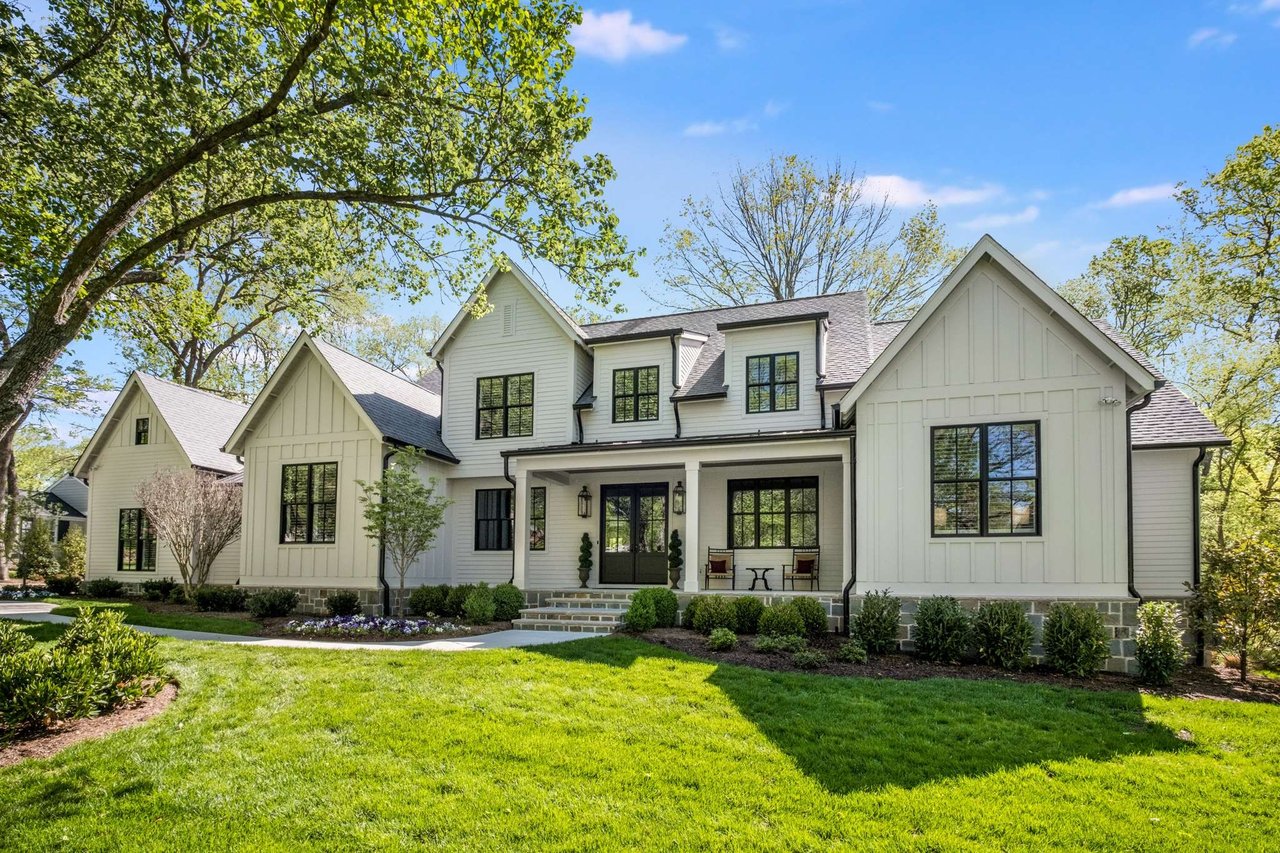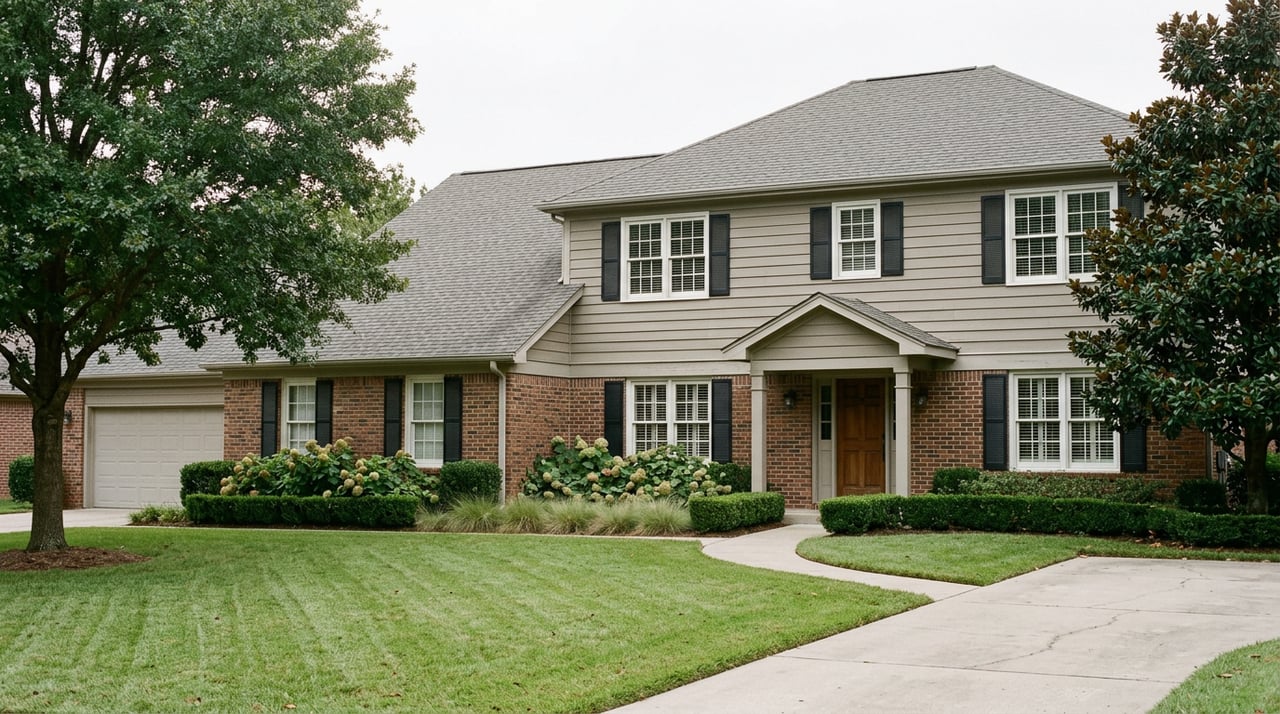
A house on Graybar Lane closed in May 2026 for $5,253,000. It ran 7,281 square feet, was built in 2018, and sold in five days at $721 a square foot. That same month, the typical closed sale across Green Hills landed closer to $425 a square foot. Both houses carry the same zip code and the same "Green Hills" label on the listing sheet. They are not the same product, and treating them like one is where a lot of buyers lose their footing before they ever write an offer.
I spend a lot of time pricing renovations before I price houses, and Green Hills is the neighborhood where that habit pays off fastest. The published median here, the number every portal leads with, is not describing a typical house. It is an average of two markets that happen to share a boundary: original or lightly updated homes trading close to their land value, and freshly built teardown-rebuild homes trading at a premium that has nothing to do with the lot next door. If you are comparing Green Hills to Franklin or Brentwood using one headline figure, you are comparing an average of extremes to somebody else's more uniform market. That is the mistake worth fixing before you tour a single house.
Two Housing Stocks, One Zip Code
Green Hills spans the 37215, 37204, and 37205 zip codes, and its housing inventory splits cleanly into two categories that the MLS itself tracks separately: traditional site-built homes, which made up roughly 71 percent of house sales over a recent rolling 12-month period, and detached homes on shared horizontal property regime lots, the remaining 29 percent. The oldest home in that same data set was built in 1922. The newest was finished in 2026. The median year built across all of it landed at 2004, a number that only makes sense once you realize it is averaging 80-year-old cottages against houses that were framed last spring.
That median year-built figure is the tell. It is not describing a neighborhood full of early-2000s houses. It is describing a neighborhood where heavy renovation, teardown-rebuild, and true infill construction happen at a rate high enough to drag the average forward by decades, block by block, even while plenty of original 1940s and 1950s stock is still standing untouched two doors down.
What "HPR-Detached" Actually Means for a Buyer
That second category, the horizontal property regime detached homes, trips up buyers who assume Green Hills is strictly single-family sprawl. An HPR-detached home looks like a standalone house from the street, but it sits on a shared platted lot with one or more other units, governed by an association the way a condo would be, even though there is no shared wall. You get the privacy of a detached structure with some of the same due diligence a condo buyer would run: reserve funds, shared maintenance obligations, and rules that can affect what you're allowed to change about the exterior. Nearly three in ten Green Hills house sales fall into this category, so if a listing looks like a single-family home but the price feels low for the lot size, checking whether it's platted as HPR is worth doing before you assume you found a deal on land.
Where Each Market Actually Concentrates
The two markets are not distributed evenly across the neighborhood. They cluster, and knowing the clusters tells you more than the median ever will.
| What's there | What the price signals | |
|---|---|---|
| Estes Road, Golf Club Lane, and the streets near the Forest Hills border | Larger lots, up to 1.8+ acres, average lot size around 0.35 acres neighborhood-wide | Estate-scale land value, room to build without fighting a tight footprint |
| Tyne Boulevard and the Tyne Meade streets | Concentrated recent new construction, including a $6.10 million close on Hemingway Drive in 2026 and a $5.03 million close on the same street in 2025 | Fresh builds commanding the top of the per-square-foot range |
| Woodmont Estates and Abbottsford | Established residential streets with mid-century homes and a mix of renovation-stage stock | Renovated character, priced for updated condition rather than raw land |
| Seven Hills | Sits on the Green Hills and Forest Hills boundary | Buyers cross-shop both markets, pricing reflects that overlap |
None of this shows up in a single median. It shows up when you walk a street and notice that half the lots have already turned over to new construction while the other half are still holding 1950s brick.
When You Are Buying the Lot, Not the House
Here is the friction that catches buyers off guard most often. An original-condition ranch in Green Hills, priced in the high six figures or low seven figures, is frequently not being valued for the structure at all. It is being valued for the dirt. Builders have treated Green Hills as one of the most active tear-down and rebuild markets in Davidson County for the past five years, pricing the finished new construction anywhere from $2.5 million to well over $6 million depending on lot size and finish level. That range only works financially because the underlying land supports it. If you tour a dated ranch and think you found a bargain on a house that "just needs some cosmetic work," ask yourself whether the asking price actually reflects the structure or the parcel it sits on. In an infill market like this one, those are frequently two different numbers, and the seller's agent already knows which one they're quoting.
This cuts the other way too. A newly built home clearing $700 a square foot is not overpriced relative to the neighborhood median. It is priced for a different product entirely, one where the land cost, permitting timeline, and finish-out were all absorbed before the first walkthrough. Comparing that number to the $425 median as if they belong on the same scale is comparing apples to an average that includes both apples and oranges.
The Permitting Clock Nobody Mentions at the Open House
If you are the buyer looking at a teardown lot rather than a finished new build, the timeline matters as much as the price. Nashville requires a permit and a site plan before construction starts, showing property lines, existing structures, and easements. Homes over 5,000 square feet need full construction plans reviewed before that permit is issued, and depending on the parcel, sign-off may be required from Water and Sewer, Stormwater, Planning, or Historic review before anything moves forward. A home is not finished, legally, until Metro issues a Use and Occupancy letter, regardless of how complete the finishes look. For a true custom build, a realistic timeline from signed contract to keys in hand runs 12 to 18 months. Buyers who assume a teardown is a fast path to a finished home in Green Hills are usually budgeting for the wrong calendar.
Reading a Listing Like You Know the Split
Before you tour, run three quick checks that the median price will never do for you:
- Compare the year built to the year renovated. A listing that leads with "updated" language on a home built before 1970 is telling you which market it belongs to.
- Weigh the price per square foot against both ends of the range, not just the headline median. Recent active listings in the neighborhood have run from roughly $205,000 on the low end to just under $10 million at the top, with an average closer to $488 a square foot across current inventory. Where a specific listing falls in that range tells you more than the citywide median ever will.
- If the listing reads like a teardown candidate, ask directly whether any site plan or permit work has already started. That answer changes your timeline by months.
A Few Questions Buyers Ask Me About This
Is an untouched original ranch in Green Hills actually a bargain? Sometimes, but only if you separate the land value from the structure value before you calculate what renovation will cost on top of the purchase price. A low price per square foot on a dated home is not automatically savings. It may just be an accurate reflection of a home priced for its lot.
How long should I plan for, start to finish, on a teardown-rebuild? Plan for 12 to 18 months from a signed contract to a move-in ready home for a true custom build, longer if the parcel needs floodplain or stormwater review before the permit is issued.
Does the Green Hills median price tell me anything useful at all? It tells you the neighborhood commands a premium relative to the broader Nashville market. It does not tell you what a specific house on a specific street will cost, because that number is an average of two products that behave completely differently.
If you're weighing a renovated ranch against a teardown lot in Green Hills, or trying to figure out which side of that split a listing actually falls on, that's the exact kind of read I do before I ever open a spreadsheet. Andy Lusk works this market street by street, and if you want a straight answer on what a specific Green Hills property is really priced for, get your free home valuation or take a look at what buyers should know before they write an offer on our buyer resources page.